Anion Gap Calculator and Lab Interpretation Guide
How the Anion Gap Measures
The anion gap is a useful way to read lab interpretation results and evaluate acid-base balance. It shows the connection between measured electrolytes in the blood, especially positively charged ions and negative ions that appear on a chemistry panel. In routine clinical use, it helps determine whether a metabolic acidosis is present and whether the cause may involve unmeasured anions.
Most of the time, the anion gap is derived from a standard electrolyte panel or basic metabolic panel. The important values are serum sodium, serum chloride, and serum bicarbonate. Because bicarbonate is an essential buffer, changes in its level can indicate a bicarbonate deficit and point to a broader metabolic disturbance. The result becomes a helpful diagnostic clue during acid-base evaluation.
Clinically, the anion gap does not confirm a disease by itself. Instead, it offers context. A high result suggests excess unmeasured acids, while a typical or low result can point toward different forms of acid-base disorders. That is why the clinical significance of the value depends on the rest of the serum chemistry, the patient’s history, and the overall medical picture.
In what way the Anion Gap Calculator Operates
An anion gap calculator applies the typical calculation formula using lab measurements. The most widely used version is:
Anion gap = serum sodium - (serum chloride + serum bicarbonate)
This formula contrasts the major measured cation, sodium, with the two main measured anions, chloride and bicarbonate. The residual difference indicates other positively and negatively charged substances not directly included in the routine panel.
In practice, the calculator is straightforward: enter sodium, chloride, and bicarbonate, then assess the output in context. A elevated number usually suggests a gap created by acids that are not fully represented on standard testing. A reduced number may indicate low albumin, laboratory issues, or unusual positively charged proteins or medications.
Because the formula depends on a handful of core analytes, it can be efficiently applied during medical assessment. It is especially useful when evaluating electrolyte imbalance, unexplained illness, or symptoms that point to a hidden acid-base problem. The calculator helps translate raw numbers into a more meaningful lab interpretation.
Some labs also display a variation that includes potassium, but the sodium-based formula is most commonly used. Regardless of the version, the goal remains the same: identify whether the chemistry pattern supports metabolic acidosis and guide the next step in the differential diagnosis.
Normal Anion Gap Values and Reference Intervals
The expected range for the anion gap depends on the laboratory reference range and the technique used by the lab. Different analyzers, assay techniques, and reporting standards can shift the expected value. For that reason, the number should always be interpreted using the specific range provided with the result.
In general, a typical result falls within a tight range, but the exact cutoffs vary. A value at the upper end of one lab’s range may be considered normal in another lab, so interpreting results requires attention to the local reference interval rather than a single universal cutoff.
Albumin matters because it is a major unmeasured anion in blood. When albumin is low, the anion gap can appear lower than expected even if clinically important acids are present. This means that a “normal” result may be misleading if the patient has low albumin. In that setting, the apparent standard anion gap may not fully reflect the true acid-base status.
For accurate laboratory interpretation, think of the value as part of the full picture. Ask whether the number fits the symptoms, the blood gas, the serum chemistry, and the overall reference range. The anion gap worked example context determines whether a result is reassuring, borderline, or a sign of an underlying disorder.
Increased Anion Gap Interpretation
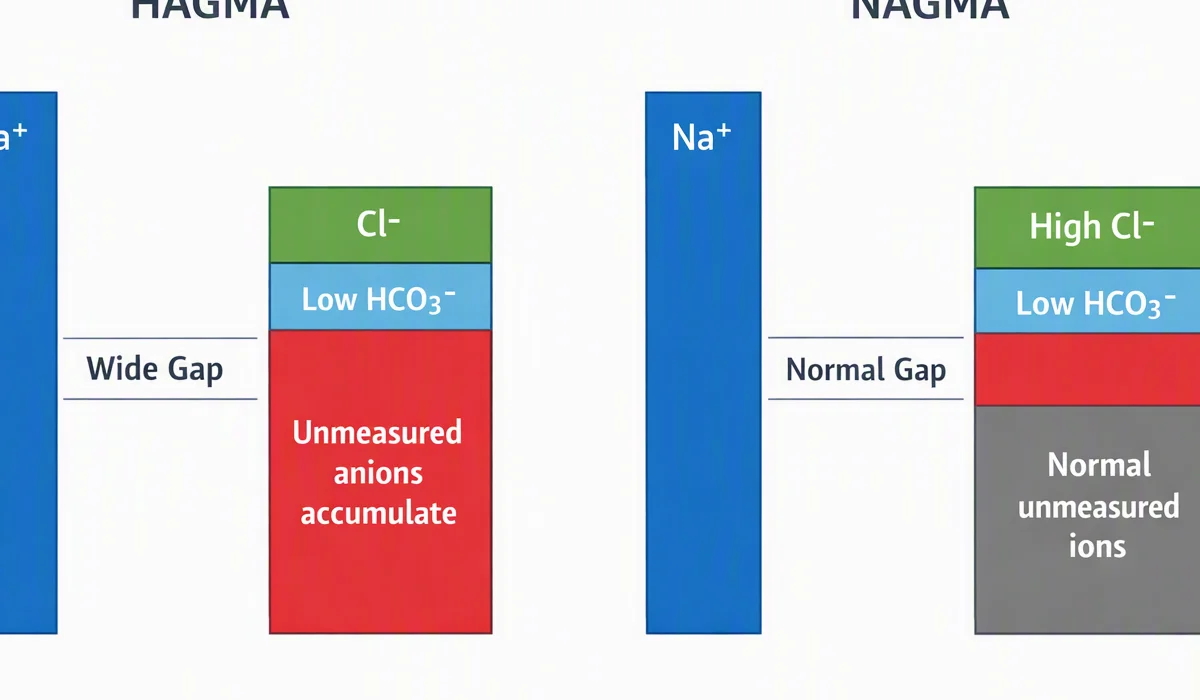
A high anion gap suggests that unmeasured acids are building up in the blood. This pattern often points to anion gap elevation and is a important clue in the evaluation of metabolic acidosis. The value is not the diagnosis itself, but it narrows the differential diagnosis significantly.
Common causes include lactic acidosis, ketoacidosis, renal failure, and toxic alcohol ingestion. Each of these conditions can worsen acid load or impair acid clearance. The calculator helps flag a metabolic pattern that needs more focused evaluation.
Lactic acidosis occurs when lactate builds up because of poor tissue oxygen delivery, shock, severe infection, seizures, or other stress states. Ketoacidosis is often seen with diabetes, starvation, or heavy alcohol use, where ketone bodies increase and reduce bicarbonate. Renal failure can increase the anion gap because the kidneys are unable to remove acids effectively. Toxic alcohol ingestion, such as methanol or ethylene glycol exposure, can produce a severe acid-base disturbance that often requires urgent treatment.
When the anion gap is elevated, clinicians usually investigate the underlying source of the acid burden, evaluate oxygen delivery, consider medication and exposure history, and compare with blood gas findings. The number provides a powerful diagnostic clue, but it should always be paired with the broader clinical picture.
Normal Anion Gap Metabolic Acid-Base Disorder
A normal anion gap does not exclude acidic blood chemistry. Indeed, some forms of acidosis occur with a unchanged gap because bicarbonate is depleted and replaced by chloride, producing a chloride shift rather than a significant rise in unmeasured anions. This pattern is often called hyperchloremic acidosis because the chloride level tends to rise as bicarbonate falls.
Common causes are diarrhea and renal tubular acidosis. With diarrhea, the body loses bicarbonate through the gastrointestinal tract, creating a bicarbonate loss pattern. In renal tubular acidosis, the kidneys fail to acidify urine or conserve bicarbonate appropriately, leading to a similar lab pattern. In both situations, the anion gap may remain normal even though the patient has a real acid-base problem.
Hyperchloremia is a useful clue in this scenario. When chloride rises to offset the fall in bicarbonate, the calculated gap may stay unchanged. That is why a normal number should not automatically reassure clinicians if symptoms, blood gas results, or other laboratory findings suggest a disturbance.
Knowing this pattern helps avoid missed diagnoses. The anion gap calculator can identify when acidosis is present, but a normal result often prompts a closer look at gastrointestinal loss, kidney handling of acid, IV fluid exposure, and other causes of a non-gap metabolic disturbance.
Decreased Anion Gap Causes
A reduced anion gap is not as common than a elevated result, but it can be medically significant. The most common explanation is hypoalbuminemia, since albumin is a important unmeasured anion. When albumin falls, the calculated gap falls too, even if other acid-base factors are unchanged.
Another notable cause is paraproteinemia. In disorders that produce abundant positively charged proteins, the balance of measured ions can move and lower the gap. This makes the value a possible clue in the evaluation of plasma cell disorders or other protein abnormalities.
Lab error is also something to consider. Sample issues, analyzer interference, or reporting problems can produce a false result. If the value does not fit the clinical picture, retaking the test and reviewing the full electrolyte panel may be appropriate.
Lithium can contribute as well because it is an unmeasured cation. In a patient taking lithium, a reduced gap may suggest the medication effect rather than an acid-base disorder alone. As always, lab interpretation depends on the medication history, the full chemistry profile, and the broader medical context.
Albumin-Corrected Anion Gap
Since albumin significantly affects the result that is measured, an albumin-corrected anion gap can provide a more accurate estimate in patients with low albumin. This albumin correction modifies the result upward to account for the reduction of unmeasured negative charge from hypoalbuminemia.
The purpose of the corrected anion gap is to improve clinical interpretation. If a patient has hypoalbuminemia, an apparently normal or mildly elevated result may underestimate the degree of acid accumulation. After correction, the true corrected value may show a hidden high-gap disorder.
There are various accepted correction approaches, and exact formulas can vary by source or lab system. The practical point is that low albumin reduces the apparent gap, so correction helps avoid missed anion gap elevation. This is especially important in hospitalized patients, critically ill patients, and anyone with significant nutrition issues, liver disease, or protein loss.
For best results, interpret the corrected number alongside the patient’s symptoms, blood gas, and chemistry panel. The adjustment is not meant to replace clinical judgment. Instead, it strengthens the quality of the acid-base evaluation and promotes more accurate decision-making.
When to Use the Anion Gap in Clinical Practice
The anion gap is most useful when there is suspicion for an acid-base disorder, unexplained illness, or a change in the basic metabolic panel. It is a fast assessment tool during diagnostic evaluation and can help identify important acid-base disorders before more specialized tests are available.
A common use case is pairing the result with an arterial blood gas. The blood gas helps define pH, carbon dioxide, and anion gap clinical significance bicarbonate levels, while the chemistry panel and anion gap help determine whether the problem is a high-gap acidosis, normal-gap acidosis, or something else. Together, they provide a more complete acid-base evaluation.
The calculation is especially valuable when the cause of illness is not apparent. For example, a patient with vomiting, altered mental status, dehydration, or kidney dysfunction may need a prompt review of the serum sodium, serum chloride, and serum bicarbonate to identify a hidden metabolic disturbance. The result can help guide further testing, treatment priorities, and the overall differential.
Used well, the anion gap is not just a number. It is a diagnostic clue that supports medical assessment, highlights possible electrolyte imbalance, and gives structure to the interpretation of routine serum chemistry data.
Frequently Asked Questions
What is the anion gap and why does it matter?
The anion gap is a calculated value from routine blood tests that helps assess acid-base balance. It matters because it can reveal metabolic acidosis and point toward causes such as lactic acidosis, ketoacidosis, renal failure, or toxic alcohol ingestion. It is a helpful aid for lab interpretation and broader clinical assessment.
How do you calculate the anion gap from lab values?
The most common anion gap formula is: sodium minus the sum of chloride and bicarbonate. In other words, anion gap = serum sodium - (serum chloride + serum bicarbonate). Anion Gap Calculator automates this calculation formula using values from an electrolyte panel or basic metabolic panel.
What does a high anion gap mean?
A high anion gap often suggests there are extra unmeasured acids in the blood. Frequent causes are lactic acidosis, ketoacidosis, renal failure, and toxic alcohol ingestion. It is a key clue in the workup of acid-base disorders and usually needs further diagnostic workup.
What causes a low anion gap?
A low anion gap is commonly caused by hypoalbuminemia. Other causes include paraproteinemia, lab error, and exposure to lithium. If the result appears surprising, repeating the test and reviewing albumin and the full electrolyte panel can help clarify the finding.
Should the anion gap be corrected for albumin?
Yes, albumin correction is often helpful when albumin is low. The albumin-corrected anion gap can uncover a hidden high-gap disorder that might otherwise be missed. This corrected value improves clinical interpretation, especially when hypoalbuminemia is present and the uncorrected number seems normal or only mildly abnormal.