Anion Gap Calculator for Alcoholic Ketoacidosis
What Is an Anion Gap Calculator?
An anion gap calculator is a basic assessment tool used to estimate the difference between measured electrolytes in the blood, usually based on sodium, chloride, and bicarbonate. This calculated value helps assess whether there is an anion gap increase suggestive of metabolic acidosis and related patterns of acid-base imbalance.
In routine serum chemistry interpretation, the calculator aids clinical interpretation by helping recognize whether there is an accumulation of unmeasured acid in the bloodstream. Because the body normally maintains tight acid-base balance, even small shifts in laboratory values can indicate an important metabolic derangement.
The main advantage of an anion gap calculator is its diagnostic utility. It does not confirm a condition by itself, but it provides a fast way to screen for high anion gap metabolic acidosis, triggering further review of the patient’s symptoms, medications, and possible causes of acid accumulation.
In practice, the calculator is often used alongside the broader anion gap formula, other laboratory values, and the overall clinical picture. That includes looking for signs of electrolyte imbalance, dehydration, and acid-base disturbance that may require urgent evaluation.
What Is the Way the Anion Gap Connects to Alcoholic ketoacidosis
Alcoholic ketoacidosis is a kind of metabolic emergency that can develop after intense alcohol consumption, reduced nutrition, and ongoing vomiting. The condition is characterized by increased ketone production, especially when the body moves away from glucose use and into fat metabolism. This causes the buildup of acidic ketones, including beta-hydroxybutyrate, which can elevate the anion gap.
In alcoholic ketoacidosis, the blood often shows ketonemia with high levels of ketones, but the pattern may be less obvious if only urine ketones are checked. Beta-hydroxybutyrate is especially significant because it is frequently the main ketone in this condition. As these acids build up, they consume bicarbonate, lowering bicarbonate and resulting in metabolic acidosis.
This is why the anion gap calculator is so valuable in this setting. A high value can reinforce suspicion for high anion gap metabolic acidosis, especially when combined with the patient’s history, volume status, and other laboratory findings. It can also be used to separate alcoholic ketoacidosis from other causes of acidosis that may seem similar at first glance.
Alcoholic ketoacidosis often occurs in the setting of volume depletion, poor oral intake, and ongoing vomiting. Those factors can intensify acid-base changes and make interpretation more complex. In some cases, the patient may have a mixed acid-base disorder, meaning more than one process is affecting the final pH.
How to Determine the Anion Gap
The usual approach to determining the anion gap uses sodium, chloride, and bicarbonate. The typical calculation is:
Anion gap = sodium - (chloride + bicarbonate)
These measurements are typically obtained from a basic metabolic panel or other serum chemistry panel. A higher than expected result suggests that unmeasured anions may be present in the blood, which is why the calculator is valuable for assessing acid-base disorders.
Albumin also matters because it is a key unmeasured anion. When albumin is low, the measured anion gap can appear incorrectly normal or only mildly elevated. For that reason, lab result interpretation should consider whether an albumin-corrected anion gap is needed.
To use the calculator accurately, it helps to review each component thoroughly:
- Sodium indicates the main measured cation in the formula.
- Chloride and bicarbonate are the main measured anions included in the calculation.
- Albumin influences the expected baseline and may change the interpretation.
Because subtle changes in these laboratory values can shift the result, clinical interpretation should never rely on the number alone. A patient with alcoholic ketoacidosis may have a markedly abnormal anion gap even before severe pH changes are obvious.
Anion Gap Formula and Albumin Correction
The anion gap formula is easy to follow, but interpretation becomes more complex when albumin is low. Since hypoalbuminemia decreases the baseline anion gap, the uncorrected result may miss the true degree of acid-base disturbance.
That is why an albumin-corrected anion gap is often helpful. Adjusting for albumin enhances the corrected anion gap estimate and can reveal a clinically important gap that would otherwise be missed. This is important in patients with poor nutrition, chronic illness, or heavy alcohol use, where low albumin may be common.
A typical reference range for the anion gap changes depending on the laboratory method and whether potassium is included in the formula. The specific cutoffs can differ by institution, so interpretation should always use the local reference range rather than assuming one universal normal value.
In alcoholic ketoacidosis, albumin correction can be especially useful because the patient may have multiple contributors to acid-base imbalance. A low albumin level may mask the severity of the high anion gap metabolic acidosis, making the corrected result more informative for clinical interpretation.
Key point: A normal-looking anion gap does not always rule out a significant acid-base disorder if albumin is low or if a mixed process is present.
Usual Test Results in Alcoholic Ketoacidosis
Alcoholic ketoacidosis commonly creates a recognizable array of laboratory findings, though not every patient demonstrates the same picture. The core abnormality is usually elevated beta-hydroxybutyrate, which indicates active ketone production and helps support the diagnosis of ketonemia.
Glucose may be low, unremarkable, or only somewhat elevated. This helps distinguish alcoholic ketoacidosis from diabetic ketoacidosis, where glucose is often much higher. However, blending can occur, so glucose alone should not be used as the sole discriminator.
Lactate may also be raised, especially if there is poor perfusion, volume depletion, or impaired metabolism. That means some patients have both ketoacidosis and lactic acidosis, which can deepen the high anion gap. Lactate elevation does not exclude alcoholic ketoacidosis; it may simply introduce another layer of acid accumulation.
These findings may include:
- Elevated beta-hydroxybutyrate
- Signs of ketonemia
- Decreased bicarbonate
- High anion gap
- Fluctuating glucose level
- Potential lactate elevation
The set of these laboratory values backs up the diagnosis, but the clinical context remains essential. Symptoms such as vomiting, poor intake, and recent alcohol cessation are especially important in identifying the underlying metabolic derangement.
How to Read Findings Safely
Prudent reading of the anion gap involves looking beyond the calculator result and reviewing the complete acid-base picture. A patient may have a high anion gap and still have a near-normal pH if another process is also present. That is the hallmark of a mixed acid-base disorder.
For example, vomiting can produce metabolic alkalosis from loss of gastric acid while alcoholic ketoacidosis produces metabolic acidosis. The net pH may appear less abnormal than expected. Because of that, a normal or only slightly abnormal pH should not supersede other evidence of a serious acid-base disturbance.
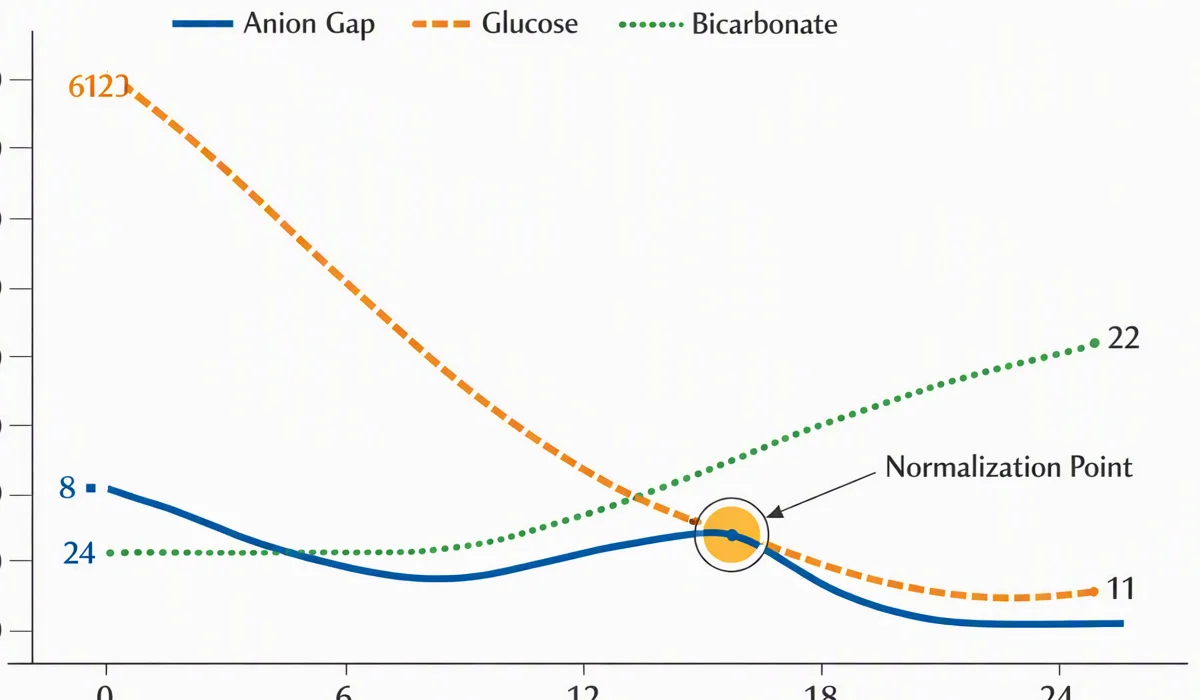
An arterial blood gas can help determine whether there is true acidemia, compensation, or an additional respiratory component. Blood gas data, together with serum chemistry, improves lab result interpretation and helps identify the full pattern of metabolic acidosis.
The osmolar gap is another helpful piece of information when the diagnosis is uncertain. An elevated osmolar gap may raise concern for toxic alcohol ingestion, especially if the history is unclear. In that setting, the anion gap calculator helps with differential diagnosis, but it should be used as part of toxin screening and broader evaluation rather than as a standalone answer.
Clinical interpretation is safest when all of the following are considered together:
- Clinical signs and history
- Serum chemistry results
- Arterial blood gas
- Albumin level
- Osmolar gap
- Possible mixed acid-base disorder
Typical Causes of a High Anion Gap
Alcoholic ketoacidosis is one possible cause of high anion gap metabolic acidosis, but it is not the sole cause. An elevated gap reflects the buildup of acid from multiple potential sources, and the differential diagnosis should remain open.
Important causes include methanol poisoning, lactic acidosis, uremia, and diabetic ketoacidosis. Each condition can produce a similar laboratory pattern, though the history and accompanying findings often vary.
In toxic cases, toxic alcohol ingestion may also create an elevated anion gap and an increased osmolar gap, especially in the early stages. That overlap is why clinical caution matters. If toxic ingestion is suspected, urgent evaluation and toxin screening may be required.
Other contributors may include renal failure, severe infection, shock, and other forms of metabolic acidosis. The anion gap calculator helps flag the abnormality, but the next step is identifying the underlying cause.
For clinical differential diagnosis, clinicians often compare patterns such as:
- Ketone-related acid accumulation in alcoholic ketoacidosis
- Severe hyperglycemia in diabetic ketoacidosis
- Increased lactate in lactic acidosis
- Renal retention of acids in uremia
- Potential osmolar gap shifts with methanol or other toxic alcohol ingestion
When You Should Seek Immediate Medical Assessment
Alcoholic ketoacidosis can worsen rapidly, especially when it is combined with ongoing vomiting, dehydration, or impaired mental status. Symptoms may present with nausea and abdominal discomfort, then corrected AG tool clinical advance to weakness, tachycardia, and confusion.
Vomiting and fluid loss are especially concerning because they intensify volume depletion and can worsen the acid-base disturbance. A rapid heartbeat, or tachycardia, may suggest significant physiologic stress or dehydration.
Confusion or disorientation is a major warning sign and should require urgent evaluation. This can reflect severe metabolic derangement, poor perfusion, hypoglycemia, toxic ingestion, or another medical emergency. If symptoms are severe or worsening, immediate medical care is recommended.
People with suspected alcoholic ketoacidosis should not rely on a calculator result alone. A high anion gap, low bicarbonate, ketonemia, or abnormal arterial blood gas can suggest a condition that needs urgent treatment, including fluids, glucose, electrolyte correction, and close monitoring.
Get urgent medical help if you notice:
- Repeated vomiting
- Severe dehydration
- Fast heart rate or weakness
- Confusion
- Possible toxic alcohol exposure
- Worsening acid-base disturbance
Common Questions About Anion Gap Calculator and Alcoholic Ketoacidosis
Why would someone use an anion gap calculator for alcoholic ketoacidosis?
An anion gap calculator is used to estimate the anion gap from routine lab values and help identify high anion gap metabolic acidosis. In alcoholic ketoacidosis, it helps support the diagnosis when ketones, low bicarbonate, and other laboratory values suggest acid accumulation. It is most useful for clinical interpretation, not as a standalone diagnosis.
What formula is used to calculate the anion gap from sodium, chloride, and bicarbonate?
The standard anion gap formula is sodium - (chloride + bicarbonate). This uses measured serum chemistry values to estimate the amount of unmeasured anions in the blood. If the result is above the local reference range, it indicates an acid-base disturbance such as metabolic acidosis.
What causes alcoholic ketoacidosis to produce a high anion gap?
Alcoholic ketoacidosis leads to a high anion gap because the body produces excess acidic ketones, especially beta-hydroxybutyrate. These acids increase ketonemia, lower bicarbonate, and contribute to high anion gap metabolic acidosis. Vomiting, poor intake, and volume depletion can worsen the metabolic derangement worse.
Is albumin useful to correct the anion gap?
Yes, albumin should be taken into account because hypoalbuminemia can make the anion gap appear artificially low. An albumin-corrected anion gap can better reflect the true acid-base status. This is especially important when interpreting labs in patients with poor nutrition, chronic illness, or suspected alcoholic ketoacidosis.
What other conditions can cause a high anion gap besides alcoholic ketoacidosis?
Other common causes include diabetic ketoacidosis, lactic acidosis, uremia, and toxic alcohol ingestion such as methanol. These conditions can overlap in symptoms and laboratory findings, so the anion gap calculator should be used as part of a broader differential diagnosis and clinical evaluation.